
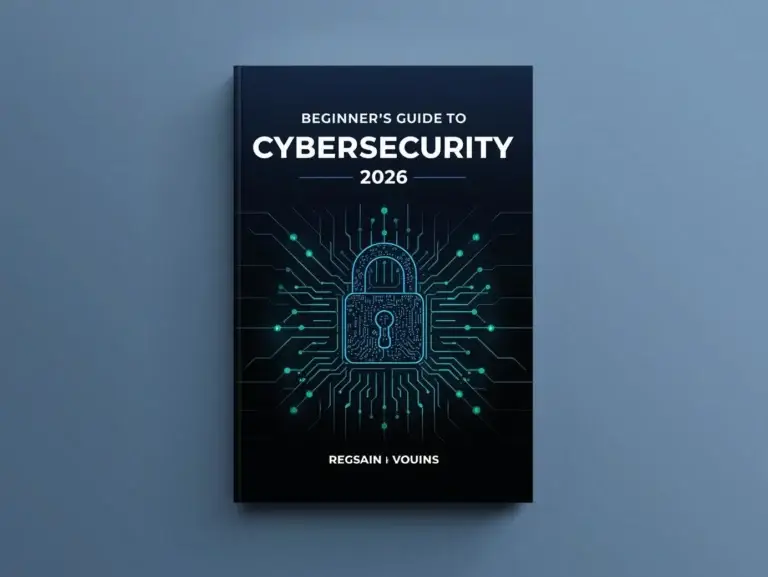
Beginner’s Guide Cybersecurity 2026, our lives are increasingly interconnected. From online banking and digital education to telecommuting and intelligent residences, all functions depend on the internet. As our digital landscape evolves, cyber threats also proliferate.
If you are unfamiliar with cybersecurity, do not be concerned. This introductory book will elucidate fundamental concepts and demonstrate methods for safeguarding your online presence.
🔐 What Is Cybersecurity?
Beginner’s Guide to Cybersecurity 2026 involves safeguarding systems, networks, and data against digital assaults. These assaults typically target:
- Appropriating confidential information (passwords, financial details)
- Interrupting services
- Coercing financial payment (ransomware)
- Detrimental to reputation
Consider cybersecurity as a protective framework for your gadgets and digital existence.
🌐 Why Cybersecurity Matters in 2026
Cybercrime is proliferating swiftly. Based on global patterns, assailants are currently employing:
- Phishing emails enabled by artificial intelligence
- Fraudulent deepfake schemes
- Sophisticated ransomware
- Social engineering methodologies
As the utilization of cloud platforms, digital wallets, and IoT devices increases, it is imperative for novices to comprehend fundamental security procedures.
Cybersecurity is imperative; it is no longer a matter of choice.
🚨 Common Types of Cyber Threats
Here are some major threats you should know:
1. Phishing
Fake emails or messages that trick you into revealing personal information.
Example: A fake bank email asking you to “verify your account.”
2. Malware
Malicious software like viruses, worms, and trojans that infect your device.
3. Ransomware
A type of malware that locks your files and demands payment.
4. Password Attacks
Hackers use brute force or leaked databases to guess weak passwords.
5. Social Engineering
Manipulating people into sharing confidential information.
🛡️ Essential Cybersecurity Practices for Beginners
Beginner’s Guide Cybersecurity 2026; Here’s how you can protect your digital world:
✅ 1. Use Strong and Unique Passwords
- Use at least 12–16 characters
- Combine uppercase, lowercase, numbers, and symbols
- Avoid using the same password everywhere
- Consider a password manager
✅ 2. Enable Two-Factor Authentication (2FA)
Adds an extra layer of security using:
- SMS codes
- Authentication apps
- Hardware keys
Even if someone steals your password, they can’t log in easily.
✅ 3. Keep Your Software Updated
Updates fix security vulnerabilities. Always update:
- Operating systems
- Browsers
- Apps
- Antivirus software
✅ 4. Be Careful with Emails and Links
- Don’t click suspicious links
- Check sender email addresses carefully
- Avoid downloading unknown attachments
✅ 5. Use Secure Wi-Fi
- Avoid public Wi-Fi for banking
- Use a VPN when necessary
- Secure your home router with a strong password
🔒 Protecting Your Social Media Accounts
Social media accounts are common targets.
- Make profiles private
- Don’t overshare personal details
- Disable location sharing
- Review login activity regularly
Remember: oversharing online can lead to identity theft.,
💻 Cybersecurity for Students and Beginners in Tech
Beginner’s Guide to Cybersecurity 2026: If you’re a student or aspiring IT professional:
- Learn networking basics
- Understand how firewalls work
- Practice ethical hacking in legal labs
- Use platforms like TryHackMe or Hack The Box
- Stay updated with cybersecurity news
Cybersecurity is also a growing career field with high demand globally.
📱 Mobile Security Tips
Smartphones hold a lot of personal data. Protect them by:
- Using screen locks (PIN, fingerprint, face ID)
- Installing apps only from official stores
- Reviewing app permissions
- Enabling remote wipe options
🌍 The Future of Cybersecurity
In 2026 and beyond, we will see:
- AI-based defense systems
- Zero Trust security models
- Stronger privacy regulations
- More cybersecurity awareness education
As technology evolves, so must our security habits.
🎯 Final Thoughts
Cybersecurity isn’t just for experts — it’s for everyone.
By practicing simple habits like strong passwords, enabling 2FA, and staying alert to phishing attempts, you can significantly reduce your risk.
Your digital world is valuable. Protect it.
🚀 Start Today
Take 10 minutes right now:
- Change weak passwords
- Enable 2FA on important accounts
- Update your devices
Small actions today can prevent big problems tomorrow
Also Read :A Beginner’s Guide to Cybersecurity in a Digital World
8 thoughts on “Beginner’s Guide Cybersecurity 2026: Safeguarding Your Digital World”