
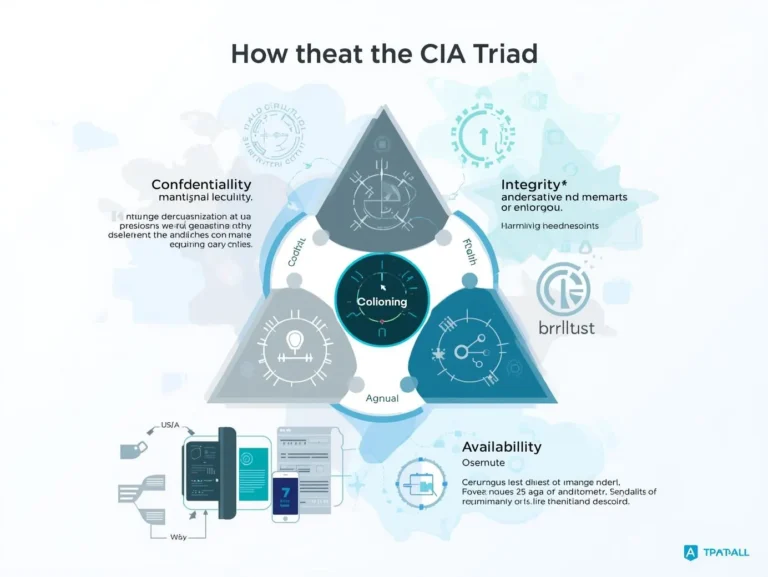
CIA Triad Explained: Confidentiality, Integrity, and Availability in Cybersecurity
Introduction to the CIA Triad
Cybersecurity is built on a few core principles, and the CIA Triad is the most fundamental of them all. The CIA Triad is a widely used security model that helps organizations and individuals protect data and systems from cyber threats.
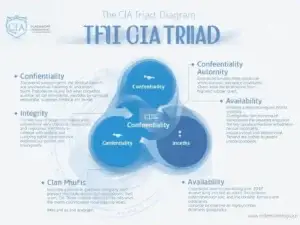
The term CIA stands for:
Confidentiality
Integrity
Availability
Together, these three pillars form the backbone of modern information security.
For more information please visit here:
What Is the CIA Triad?
Definition of the CIA Triad
The CIA Triad is a cybersecurity framework designed to ensure that information is:
Accessible only to authorized users
Accurate and trustworthy
Available whenever needed
If any one of these principles fails, the overall security of a system is compromised.
Where the CIA Triad Is Used
Corporate networks
Cloud platforms
Government systems
Healthcare records
Personal devices
Why the CIA Triad Is Important in Cybersecurity
Core Purpose
The CIA Triad helps answer three essential security questions:
Who can access the data?
Can the data be trusted?
Is the data available when required?
Impact on Organizations
Without the CIA Triad:
Data breaches become more common
Systems suffer downtime
Trust and reputation are lost
Confidentiality Explained
What Is Confidentiality?
Confidentiality ensures that sensitive information is only accessed by authorized individuals.
In simple terms:
👉 Data should be kept private.

Examples of Confidentiality
Login credentials
Bank account details
Medical records
Personal emails
Threats to Confidentiality
Phishing attacks
Weak passwords
Insider threats
Data breaches
How Confidentiality Is Protected
Data encryption (TLS, AES)
Multi-factor authentication (MFA)
Role-based access control (RBAC)
Strong password policies
Integrity Explained
What Is Integrity?
Integrity ensures that data remains accurate, complete, and unaltered unless changed by an authorized user.
👉 The data must not be tampered with.

Examples of Integrity
Correct financial transactions
Accurate exam results
Untouched software source code
Threats to Integrity
Malware infections
Man-in-the-middle attacks
Unauthorized database access
Human errors
How Integrity Is Maintained
Hashing algorithms (SHA-256)
Digital signatures
File integrity monitoring
Version control systems
Availability Explained
What Is Availability?
Availability ensures that systems, networks, and data are accessible when needed by authorized users.
👉 Security is useless if data is not available.
Examples of Availability
Websites staying online
Banking systems running 24/7
Cloud applications with minimal downtime
Threats to Availability
DDoS attacks
Ransomware attacks
Hardware failures
Power outages
How Availability Is Ensured
Regular data backups
Redundant systems
Load balancing
Disaster recovery plans
Real-World Examples of the CIA Triad
Example 1: Online Banking System
Confidentiality: Encrypted login and transactions
Integrity: Accurate transaction records
Availability: 24/7 access to services
Example 2: Healthcare Systems
Confidentiality: Patient medical records
Integrity: Correct diagnoses and prescriptions
Availability: Immediate access during emergencies
CIA Triad vs Other Security Models
Comparison with Other Frameworks
| Security Model | Main Focus |
|---|---|
| CIA Triad | Core security principles |
| Zero Trust | Continuous verification |
| Defense in Depth | Multiple security layers |
| NIST Framework | Risk-based approach |
The CIA Triad is often combined with other models to create stronger security architectures.
CIA Triad for Businesses and Professionals
Why Businesses Rely on the CIA Triad
Regulatory compliance (ISO 27001, HIPAA, GDPR)
Risk management
Data protection
Customer trust
Professional Applications
Security audits
Network design
Incident response planning
Cybersecurity training
Common Threats to the CIA Triad
Threat-to-Pillar Mapping
| Threat | Affected Pillar |
|---|---|
| Ransomware | Availability |
| Data Breach | Confidentiality |
| Insider Attack | Confidentiality & Integrity |
| DDoS Attack | Availability |
| Malware | Integrity |
Best Practices to Implement the CIA Triad
Best Practices for Beginners
Use strong, unique passwords
Enable automatic updates
Back up important data
Avoid suspicious links and downloads
Best Practices for Professionals
Implement Zero Trust architecture
Use SIEM and EDR tools
Conduct regular penetration testing
Train employees on security awareness
Maintain an incident response plan
CIA Triad in Modern Cybersecurity
Relevance Today
With cloud computing, remote work, and AI-driven attacks, the CIA Triad remains essential but must be applied with modern tools and strategies.
Modern Challenges
Cloud misconfigurations
Credential theft
Supply chain attacks
Balancing confidentiality, integrity, and availability is more important than ever.
Conclusion: Why the CIA Triad Still Matters
The CIA Triad is the foundation of cybersecurity.
Whether you are:
A beginner learning cybersecurity basics
A business owner protecting customer data
A professional designing secure systems
Understanding and applying the CIA Triad is critical for protecting digital assets in today’s evolving threat landscape.
4 thoughts on “CIA Triad Explained: Confidentiality, Integrity, and Availability in Cybersecurity”